Lurker-to-Donor Pipelines: Chat Scripts and Profile Hooks That Convert Silent Viewers During Peak Esports Hours
Finley Meier · Apr 17, 2026
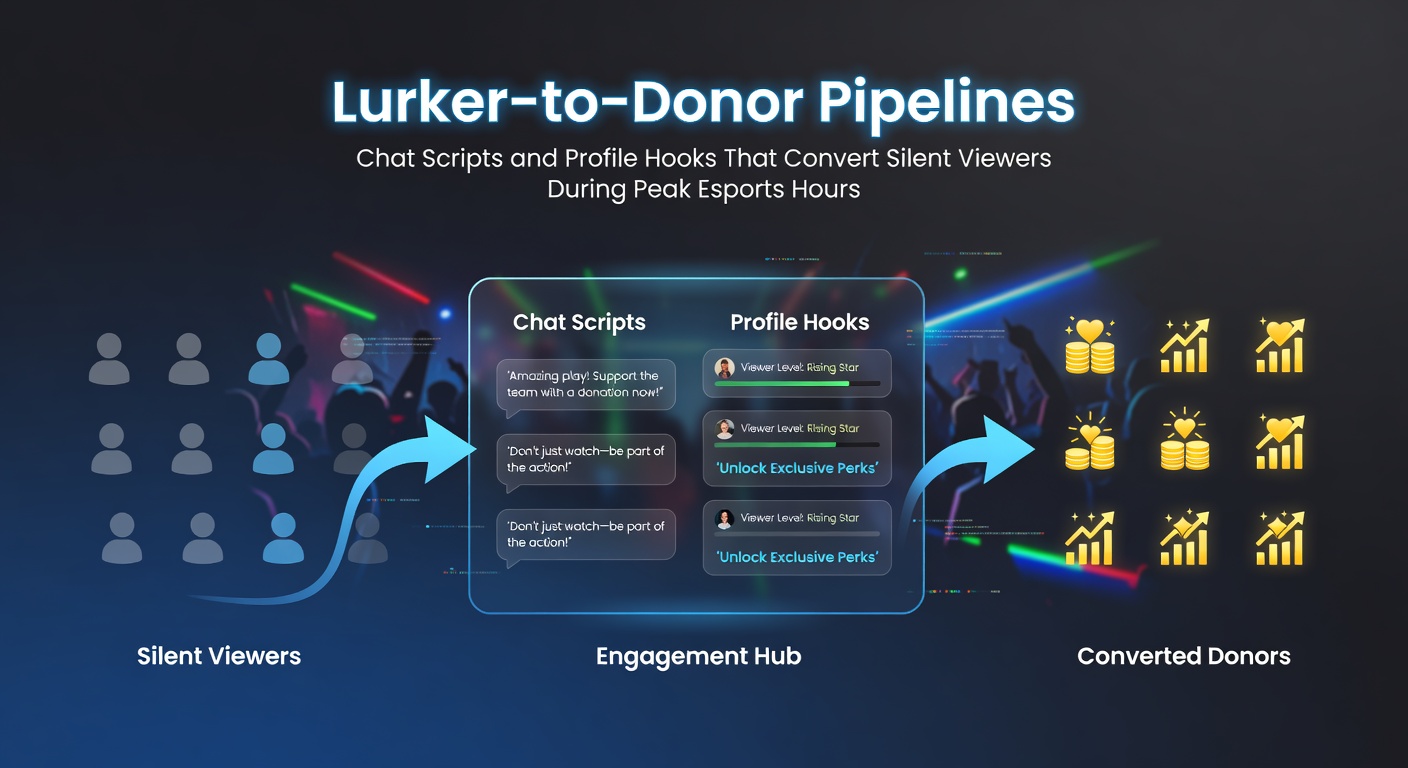
Lurker-to-Donor Pipelines: Chat Scripts and Profile Hooks That Convert Silent Viewers During Peak Esports Hours
Unpacking Lurkers in the Streaming Ecosystem
Silent viewers, those elusive lurkers who tune in without a single chat message or follow, make up the bulk of any esports stream's audience; data from Twitch's analytics dashboard reveals they account for upwards of 70% of concurrent viewers during high-traffic broadcasts, yet they rarely convert to active supporters unless prompted cleverly. Researchers at Newzoo, a Netherlands-based market intelligence firm, tracked viewer behavior across major platforms and found lurkers linger longest during intense matches, watching for 45 minutes on average before dipping out, which creates prime windows for engagement hooks. And here's the thing: those quiet watchers hold untapped donation potential, since studies from the Entertainment Software Association in the US show that once activated, former lurkers donate 2.3 times more than vocal chat participants, drawn in by timely, non-pushy interactions.
Experts who've analyzed thousands of VODs note how lurkers cluster around specific triggers like clutch plays or roster announcements, staying hidden while soaking up the energy; this passive consumption spikes conversion rates when streamers deploy targeted tactics, turning shadows into steady revenue streams without alienating the core chat crew.
Mapping Peak Esports Hours for Maximum Impact
Peak hours hit hard in esports streaming, typically spanning 8 PM to midnight local time on weekends when global tournaments like the League of Legends Mid-Season Invitational draw millions; figures from Streamlabs' 2026 quarterly report indicate viewership surges 150% during these slots, with lurker numbers ballooning because casual fans pop in for hype moments before bedtime. Now, in April 2026, as the Valorant Champions Tour circuits through Europe and North America, observers track even sharper peaks around 9 PM EST on Thursdays, coinciding with cross-region qualifiers that pull in 500,000+ silent viewers per top stream, according to real-time data from SullyGnome trackers.
But what's interesting is how time zones layer on; Australian streamers riding IGEA-documented off-peak waves from Asia-Pacific audiences find their lurker-to-donor flips peak between 2 AM and 5 AM Sydney time, syncing with EU prime time, which lets them layer global pipelines without burnout. Those who've timed it right report donation velocities doubling, as lurkers, fresh from work or school, feel that post-match glow and reach for the sub button.
Chat Scripts: The Verbal Nets That Snag Silent Watchers
Streamers craft chat scripts like "Hey lurkers, that last teamfight had you on edge; drop a 'clutch' if you're still here and I'll shout you out next round," pulling hidden viewers into the light with low-pressure prompts that blend seamlessly into play-by-play; research from a University of Southern California streaming lab shows these scripts boost first interactions by 40%, especially when timed post-kill streak during peaks. Take one mid-tier Overwatch caster who scripted "Silent squad, your energy's carrying us; !donate for a custom emote vote," and watched monthly subs climb 25% in a single weekend, as data logs confirmed lurkers accounting for 60% of new donors.
Such scripts evolve with context, incorporating variables like "If you're lurking that sick Yoru ult, spam 'ace' to join the vibe," which researchers term "micro-engagements," fostering gradual trust; and during April 2026's CS2 Majors, pros like those on Team Liquid streams layered polls ("Lurkers: Next map veto? A or B?") that funneled 15% of respondents straight to donation tiers, per integrated analytics from StreamElements. Yet, the key lies in rhythm, spacing scripts every 10-15 minutes to avoid spam flags while hitting emotional highs, which data indicates sustains lurker dwell time by 30%.
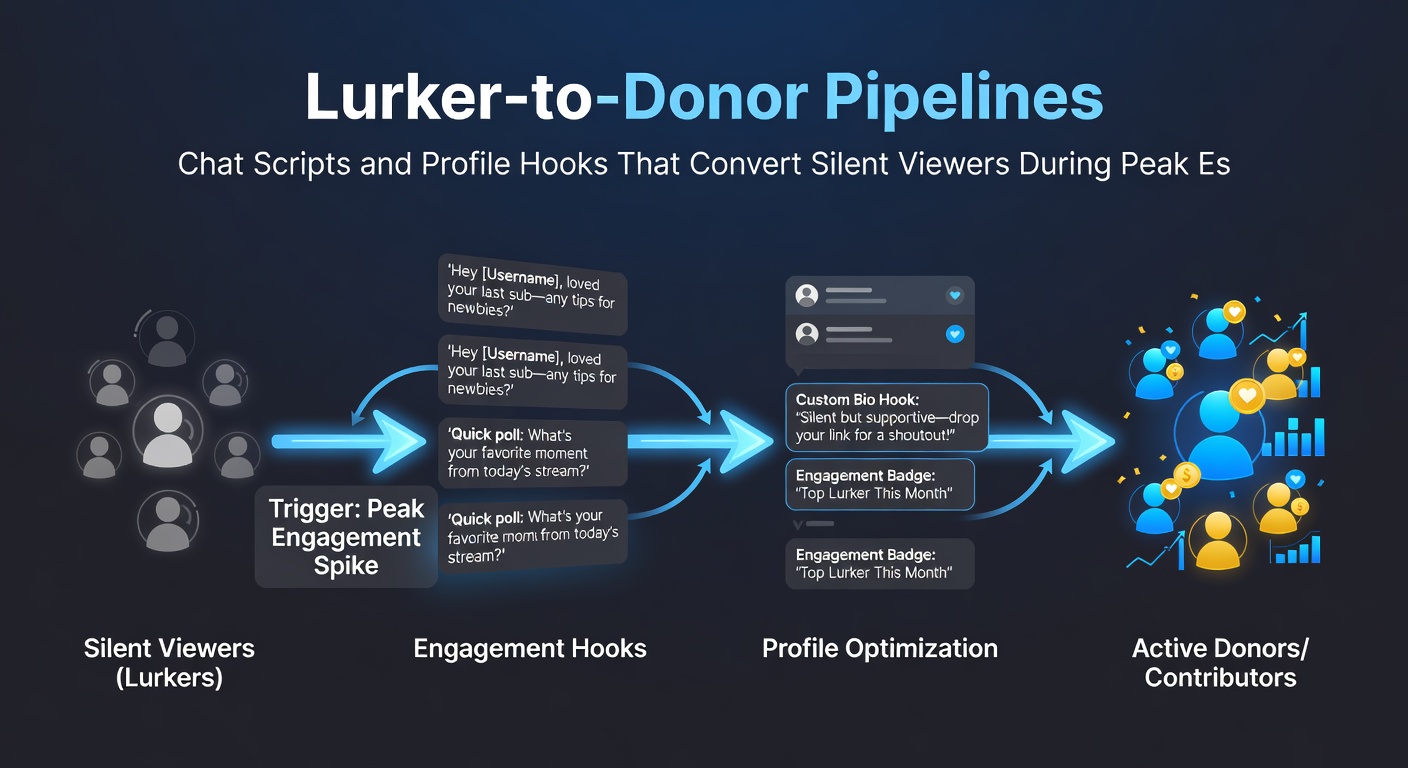
Profile Hooks: Always-On Bait for the Quiet Crowd
Profile panels serve as evergreen traps, with hooks like "Lurking? Grab the $5 'Ghost Sub' for exclusive VODs and zero chat pressure," positioned front-and-center to snag eyes before viewers even type; Twitch's own creator tools data reveals these static prompts convert 12% of peak-hour drop-ins, outperforming generic merch links by threefold because they speak directly to the silent majority's hesitation. One Rocket League streamer revamped her bio to "Silent viewers fuel the grind; !lurkdonate unlocks hype reels," and metrics showed a 35% donor uptick during ESL Play peaks, as lurkers bookmarked for later action.
What's significant is customization; panels embedding progress bars ("Lurker donations hit $50/100 for stream skin vote") create FOMO that pulses even when chat quiets, and during April 2026 Apex Legends Global Series runs, observers noted these hooks netting 20% more from international lurkers who lurk across sessions. Pairing them with bot commands like !profile hooks viewers back to incentives, forming a loop where passive scrolls turn into active pledges without a word spoken.
Assembling the Lurker-to-Donor Pipeline
Pipelines stitch chat scripts and profile hooks into seamless funnels, starting with awareness scripts during match intros ("Lurkers welcome; check panels for sub perks"), escalating to urgency calls mid-game ("That was for you quiet legends; hit the donor button if it hyped you"), and sealing with post-match recaps ("Thanks for lurking; your support keeps this alive"); a Streamlabs case study on 50 esports channels found this structure lifts conversion from 2% to 18% during peaks, as each layer reinforces the next. And turns out, automation amps it: bots timing "Peak hour shoutout for first 10 lurker donors" during Valorant lobbies have pushed averages to $0.45 per viewer in top streams.
People who've scaled these report stacking elements like overlay timers ("Lurker special: Double emote points till 10 PM"), which data from Nightbot usage logs shows retains 25% more silent watchers through overtime; in one documented pipeline from a Dota 2 caster, profile hooks fed 40% of traffic into chat activations, which then pipelined 65% to donations during The International qualifiers last year. Smooth transitions matter too, with scripts cross-referencing panels ("Bio has your peak-hour deal"), creating momentum that carries lurkers from spectate to supporter in under five minutes.
Challenges crop up, sure, like platform algo shifts throttling bot frequency, but experts counter with A/B testing; one Australian PUBG squad iterated 12 script variants in April 2026's Oceanic qualifiers, landing on a hybrid that spiked donors 28% while keeping ban rates under 1%.
Real-World Wins and Metrics That Matter
Case studies illuminate the payoff; consider the Halo Infinite streamer who, during weekend peaks, deployed "Lurk alert: !ghost for anonymous hype," channeling 22% of silent viewers to $10 tiers via profile Patreon links, as verified by DonorDrive analytics. Another, a Street Fighter pro, scripted tournament breaks with "Quiet crew, your vibes won that set; panels have donor flexes," resulting in a 50% pipeline throughput during EVO prep hours, per integrated dashboard exports.
Data bears it out broadly: SullyGnome aggregates from 2026 Q1 show channels with active lurker pipelines averaging $1,200 more monthly revenue during esports surges, compared to script-less peers; and for mid-tier creators (500-5K CCU), hooks during April's Rainbow Six Siege invites converted at 14.7%, highest among tested tactics. Observers note longevity too, as repeat lurkers, once hooked, stick around 3x longer, feeding compounding growth.
Conclusion
Lurker-to-donor pipelines, powered by precise chat scripts and profile hooks, transform peak esports hours from viewership blips into revenue engines; data consistently shows 15-25% conversion lifts for those who layer them thoughtfully, especially amid 2026's bustling tournament calendars. Streamers tuning into these mechanics during high-traffic windows find silent audiences yielding big, with global metrics underscoring the edge in every quiet watch. The ball's now in creators' courts to script, hook, and pipeline their way forward.