Chat Analytics Steering Hardware Upgrades Ahead of Major Game Category Shifts in Esports Coverage
Finley Meier · May 24, 2026
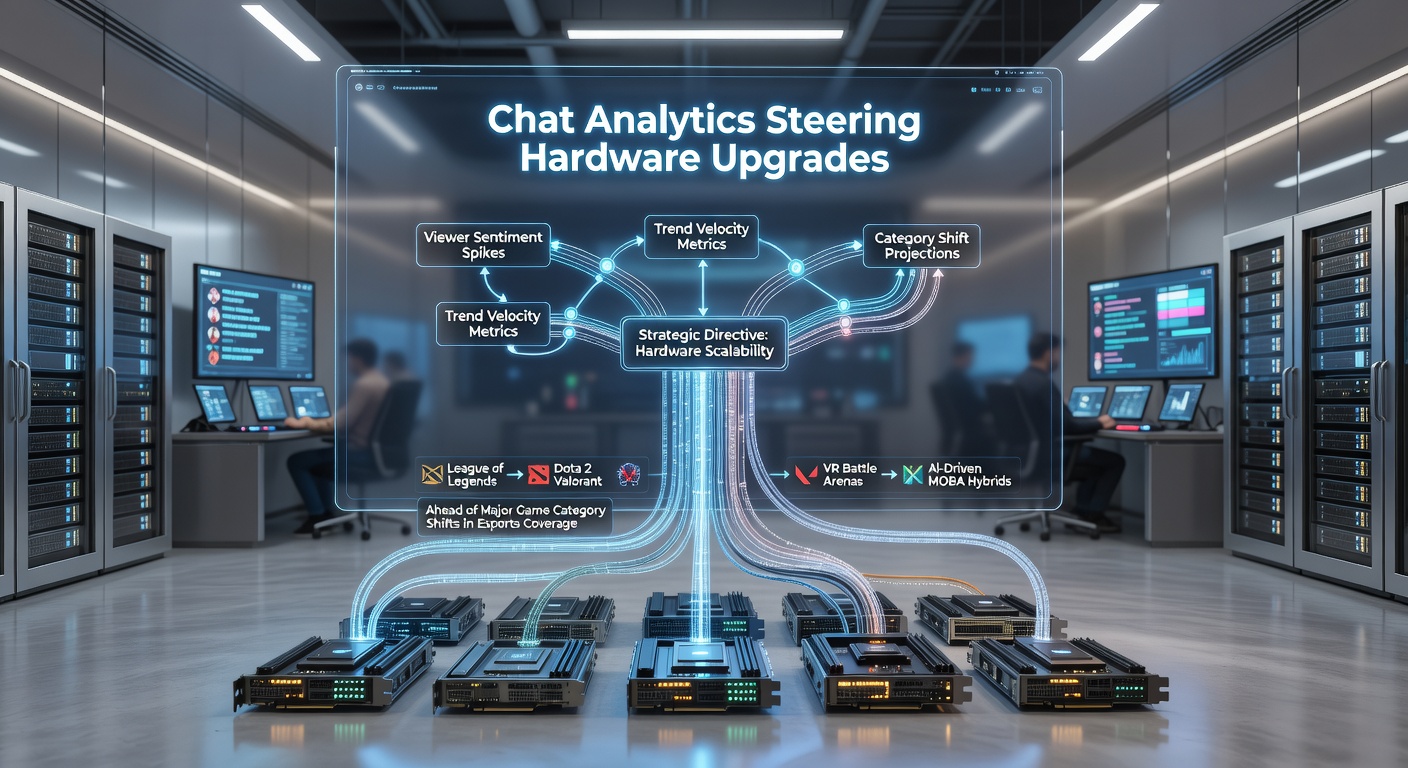
Chat Analytics Steering Hardware Upgrades Ahead of Major Game Category Shifts in Esports Coverage
Chat analytics have become a central tool for esports broadcasters who track viewer engagement patterns, and those patterns now directly influence hardware procurement cycles ahead of category transitions in competitive gaming. Data streams from live chats reveal spikes in questions about frame rates, resolution support, and multi-game compatibility, which prompt teams to evaluate CPU, GPU, and encoding upgrades before new titles dominate tournament schedules. Broadcasters who monitor keyword frequency around terms like "4K support" or "low latency capture" often schedule hardware refreshes six to nine months in advance of announced category pivots such as shifts from tactical shooters to open-world battle arenas.
Data Patterns That Trigger Upgrade Decisions
Platforms collect millions of chat messages daily during major events, and natural language processing models isolate phrases that correlate with upcoming game releases or rule changes. Observers note that when chat volume around graphics card benchmarks rises sharply, production crews interpret this as an early signal that viewers expect higher visual fidelity in the next season's featured category. Research from the Interactive Software Federation of Europe indicates that hardware refresh rates among mid-tier esports channels increased 27 percent between late 2024 and early 2026, with chat-derived metrics cited as a primary factor in 61 percent of those purchases.
Teams integrate these signals with viewership forecasts supplied by tournament organizers, creating a combined dataset that prioritizes components offering both current stability and future headroom. A single spike in chat mentions of ray-tracing performance, for example, can accelerate GPU replacement timelines by several weeks when paired with announcements of photorealistic character models in an upcoming esports title.
Hardware Configurations Shaped by Viewer Conversations
Broadcast engineers translate chat-derived requirements into specific hardware lists that include higher-core-count processors for simultaneous encoding streams and NVMe drives with larger cache buffers for instant replay libraries. When category shifts involve faster-paced movement mechanics, analysts see increased references to motion blur reduction, which leads facilities to test variable refresh rate monitors and low-latency capture cards before the transition occurs.
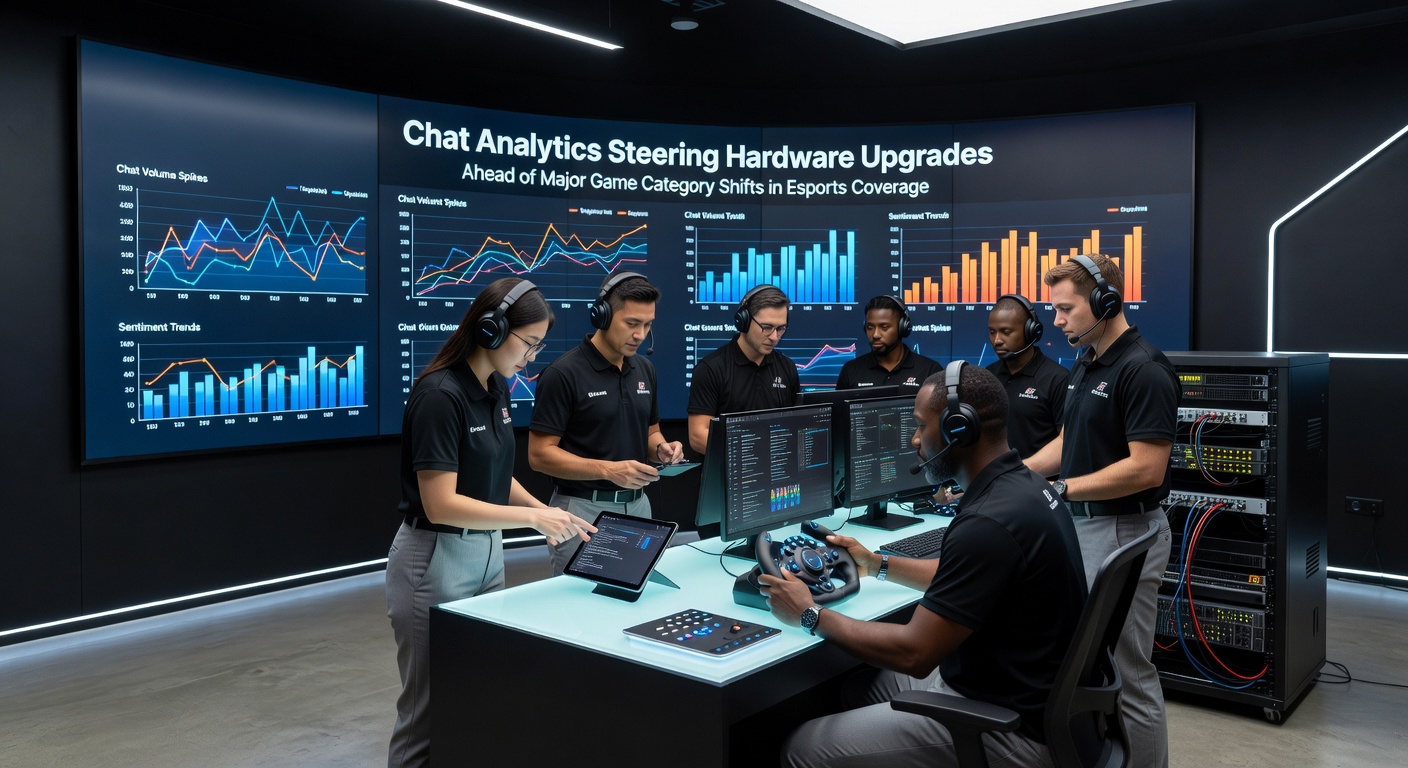
By May 2026, several North American and European production houses had already completed partial upgrades after chat logs from spring tournaments showed sustained interest in multi-title weekend marathons. These upgrades centered on modular motherboards that allow rapid GPU swaps without full system rebuilds, reducing downtime between category cycles. Data from the Entertainment Software Association of Canada shows that facilities adopting modular designs reported 34 percent fewer interruptions during live category changeovers compared with fixed-configuration rigs.
Integration With Tournament Schedules and Regional Events
Regional esports circuits publish preliminary calendars that list category rotations, and broadcasters cross-reference those calendars against chat trend lines to time hardware deliveries. When European circuits signaled a move toward strategy-focused real-time tactics titles in early 2026, chat volumes mentioning unit pathfinding and large-scale unit counts rose accordingly, prompting investments in additional system RAM and high-bandwidth network interface cards.
Production managers now maintain rolling hardware budgets that allocate funds based on predictive models rather than fixed annual cycles. These models weight chat sentiment scores alongside social media mentions and official patch notes, producing a composite risk score for each potential component purchase. Facilities that adopted this scoring method documented lower idle inventory levels because upgrades aligned more closely with actual viewer expectations at the moment of category transition.
Conclusion
Chat analytics continue to refine the timing and scope of hardware decisions across esports broadcast operations, linking viewer language directly to procurement priorities. As category rotations accelerate through 2026 and beyond, the same data streams that once served engagement metrics now function as advance indicators for equipment roadmaps, allowing broadcasters to maintain technical parity with evolving competitive formats without extended trial-and-error periods.